Core Product Features
Discover how BioCode's innovative tools transform the genomic analysis landscape.
🔬 DONORmatch: Intelligent Donor Selection
Optimize egg donor selection with our advanced genomic matching protocol. DONORmatch goes beyond standard screening, using WES/WGS to ensure the safest genetic pairing for prospective parents.
- Comprehensive Genomic Analysis: We sequence the whole exome (WES) or genome (WGS) of both the donor and the prospective father.
- Advanced Compatibility Algorithm: Our proprietary algorithm cross-references genetic profiles to identify any shared pathogenic mutations.
- Maximized Safety & Success: By preventing high-risk pairings, DONORmatch enhances the safety of the IVF process and optimizes success.
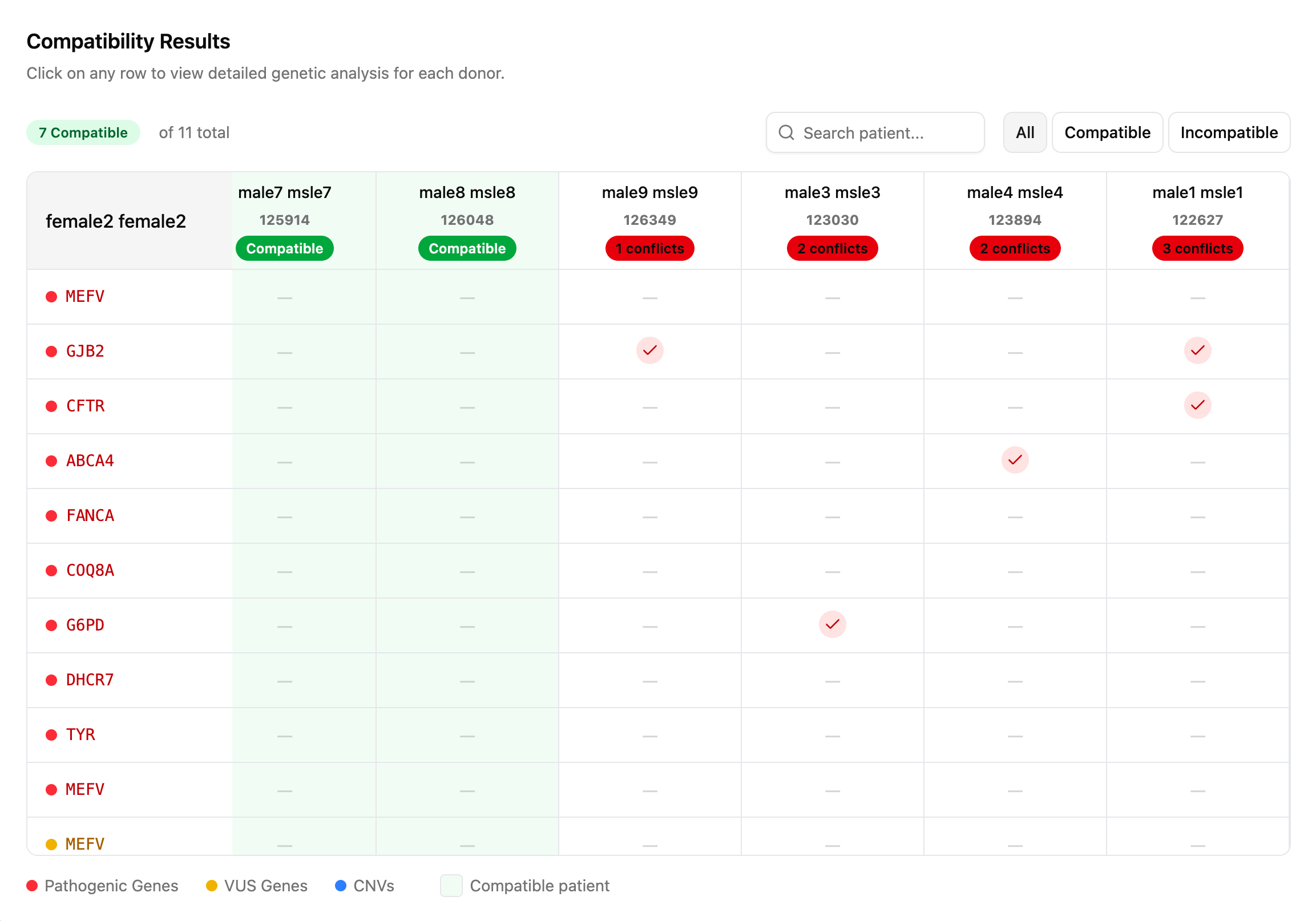
⚙️ How It Works
DONORmatch is a combinatorial genomic protocol that optimizes the selection of egg donors for couples undergoing IVF. Instead of relying on limited checks for a few genes, it utilizes Whole Exome Sequencing (WES) or Whole Genome Sequencing (WGS) for both donors and prospective fathers, allowing for complete analysis and combined genetic risk assessment.
Genomic Mapping and Database Creation
Each donor and prospective father undergoes WES or WGS, generating a list of pathogenic or likely pathogenic mutations. All donors are included in a genetic database, where their complete, anonymized profile is stored. This allows every man tested to be "matched" against the entire database.
Combinatorial Compatibility Algorithm
The DONORmatch algorithm analyzes all possible genome combinations (man-donor) to identify where there are common mutations in the same gene (increased risk for the embryo) and which combinations are genetically safe.
🧠 Real-World Examples
🧩 Cystic Fibrosis
Today, many programs exclude women who are carriers of the CFTR mutation (cystic fibrosis) without considering the male partner. For example, if Donor A has a CFTR mutation but Male B does not, the combination is perfectly safe. DONORmatch allows for this combinatorial assessment, keeping the donor in the pool and only excluding dangerous matches.
🧠 Rare Neurological Diseases
Conversely, women who have not been fully tested may carry rare mutations for conditions like epilepsy or muscular dystrophies. With DONORmatch, comprehensive WES/WGS analysis identifies such cases in advance, preventing the creation of embryos with increased genetic risk.
💡 Technological & Clinical Benefits
- Complete transparency and safety in donor matching.
- Maximum utilization of available donors (no unnecessary exclusions).
- Personalization for each prospective couple.
- Automatic combinatorial screening of thousands of genes and variants.
- Continuous improvement of the compatibility algorithm with each new sample.
Clinical Assessment Modules
Purpose-built diagnostic workflows that automate complex clinical analyses and surface actionable findings based on your patient's unique genomic profile.
Diagnosis Assessment
AI-powered diagnosis using phenotype and disorder matching. Automatically categorizes findings across multiple variant types for comprehensive clinical review.
- Phenotype Correlation: Link patient symptoms to variant findings using HPO terms.
- Categorized Findings: Main, CNV, STR, Mitochondrial, and VUS tabs for organized review.
- Disorder Matching: Input suspected disorders to focus the analysis.
(Replace with actual screenshot)
Carrier Screening
Identify carrier status for recessive conditions. Automated pathogenicity filtering surfaces clinically relevant variants.
- ✓ Gene-based carrier identification
- ✓ Sortable findings by gene
- ✓ Version-tracked results
Breast/Ovarian Cancer
Specialized BOC variant analysis with focus on hereditary breast and ovarian cancer genes.
- ✓ BRCA1/2 and related genes
- ✓ Risk evaluation
- ✓ Split-pane review interface
Cancer Predisposition
Comprehensive hereditary cancer gene panel analysis for proactive risk management.
- ✓ Pan-cancer gene coverage
- ✓ Automated assessment
- ✓ Flagging for reports
Advanced Variant Analysis
Powerful filtering, AI interpretation, and comparison tools to help clinicians identify clinically significant variants faster.
20+ Advanced Filters
Narrow down thousands of variants to the ones that matter. Filter by pathogenicity, allele frequency, prediction scores, inheritance patterns, and more.
(Replace with actual screenshot)
AI Variant Interpretation
Generate clinical interpretations in seconds. Our AI synthesizes prediction scores, population frequencies, ClinVar, OMIM, and patient phenotypes.
- • Clinical significance classification
- • Supporting evidence compilation
- • ACMG criteria auto-application
- • Recommended actions
Variant Comparison
Compare up to 3 variants side-by-side. Quickly spot differences in genomic position, clinical annotations, and prediction scores.
- • Side-by-side layout
- • Difference highlighting
- • All annotation categories
External Database Links
One-click access to external resources for each variant. Verify findings against authoritative databases.
- • VarSome integration
- • GnomAD population data
- • NCBI dbSNP
Comprehensive Data Management
From patient intake to final report, BioCode provides a single, organized hub for all your data, ensuring clarity and traceability at every step.
- Patient Record Management: Create, search, and manage detailed patient profiles with clinical information.
- Genomic Analysis Tracking: Meticulously track each genomic analysis for a clear, auditable history.
- Automated Data Processing: A powerful "Genome ETL" worker processes and integrates raw data, saving time.
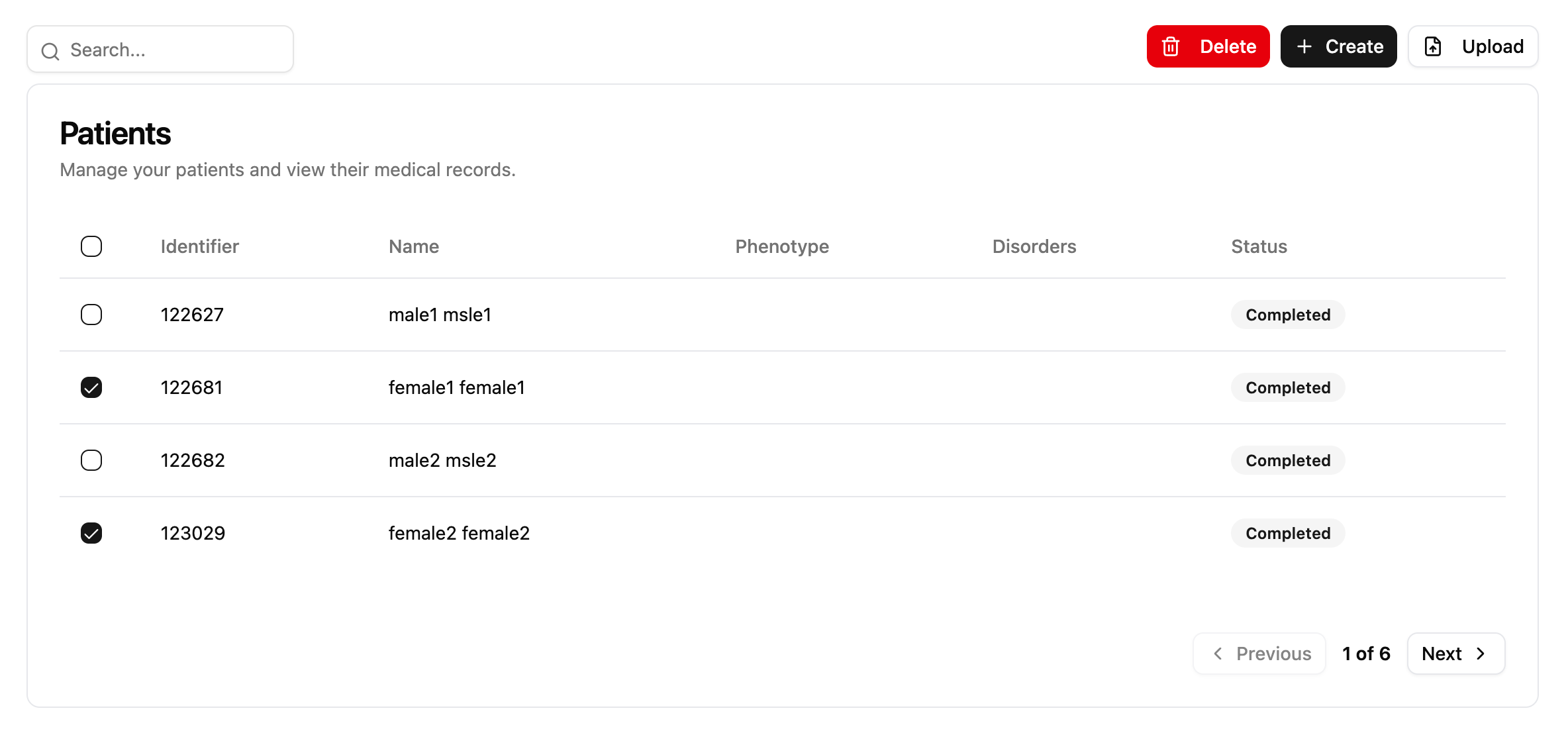
Advanced Analysis & Diagnostics
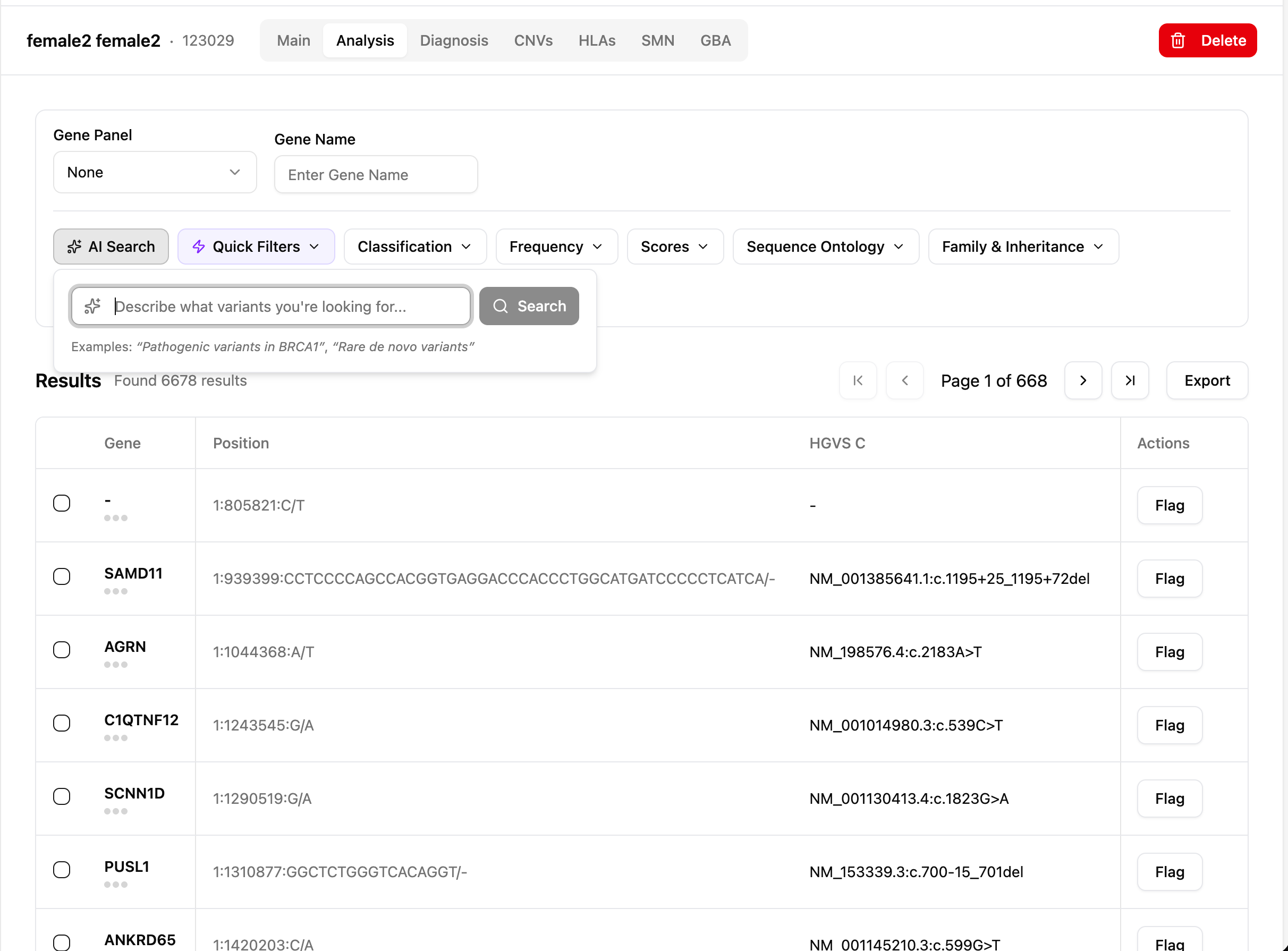
Leverage powerful automated analysis and diagnostic tools to move from raw data to actionable insights faster than ever. Customize your analysis with flexible gene panels.
- Targeted Gene Panel Analysis: Create custom `GenePanels` for targeted analyses relevant to specific diseases.
- Automated Diagnostic Assessments: Run automated workflows to suggest potential diagnoses.
- Detailed Variant Management: Manage individual findings, allowing clinicians to review and classify each genetic variant.
Clinical Reporting
Generate professional clinical reports with AI-powered summaries, multi-language support, and configurable disclosure options.
-
AI-Powered Summaries
Generate clinical summaries from OMIM with one click. Review and edit before including in reports.
-
Multi-Language Reports
Full support for English and Greek report generation with AI translation.
-
Secondary Findings Options
Configurable disclosure settings for secondary findings. Disclose or exclude based on patient preferences.
-
WES/WGS Report Types
Select between Whole Exome and Whole Genome report formats for appropriate clinical context.
(Replace with actual screenshot)
Enterprise-Ready Platform
Built for clinical laboratories with security, compliance, and scalability in mind.
Multi-Tenancy
Complete data isolation between laboratories. Each tenant operates with their own database and configurations.
Role-Based Access
Granular permission controls for different user roles. Restrict access to assessments, features, and data based on user permissions.
Bilingual Interface
Full English and Greek localization throughout the application. Switch languages seamlessly.